CLJ Series · Beijing, China
Channel Flow Meter
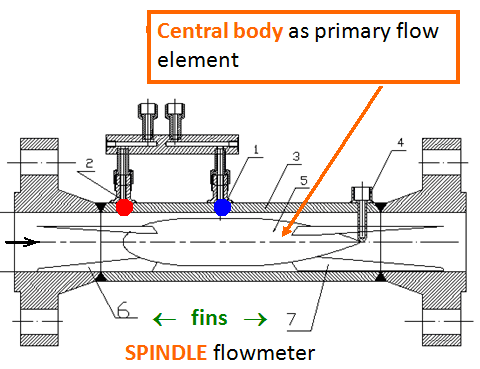
A patented differential-pressure flow meter with an annular channel and spindle-shaped throttling element. Designed for custody transfer and advanced process measurement across liquid, gas, and steam applications — without upstream or downstream straight-run requirements.
Description
Custody transfer and advanced process metering demand high accuracy across a wide range of operating conditions. Stable internal flow is the foundation of reliable measurement.
Design Requirements
- Field and laboratory environments should be hydrodynamically similar — matching Reynolds number, Mach number, and velocity profiles.
- Permanent pressure loss must be minimized to reduce energy cost and avoid disturbing the pipeline system.
- The meter must tolerate unclean process fluids through self-cleaning flow paths.
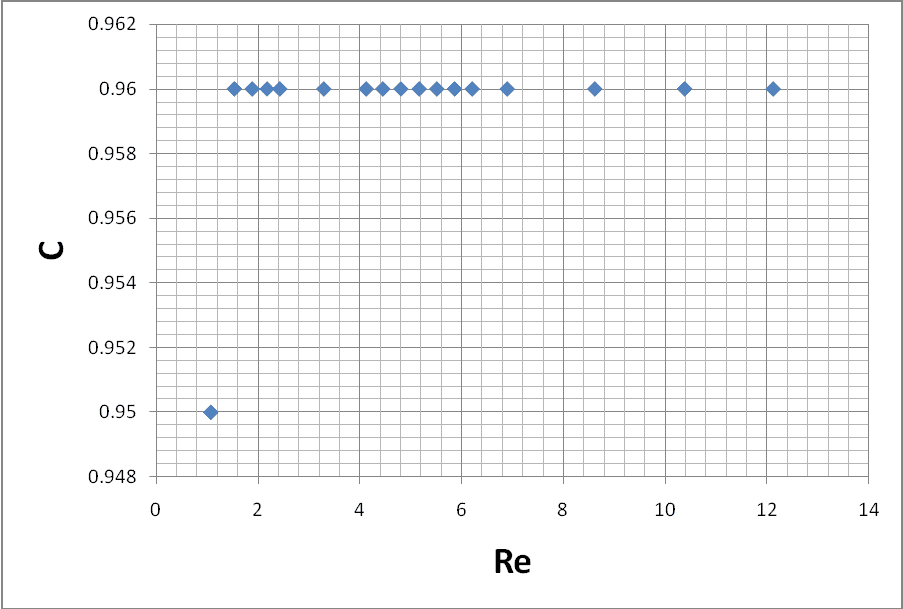
- The discharge coefficient should remain constant wherever possible, avoiding piecewise approximation or iterative correction errors.
Conventional flow meters cannot simultaneously satisfy all of these requirements under every operating condition.
Technical Approach
- Built on differential-pressure measurement, using a purpose-designed throttling element to control and reshape the internal flow field.
- Flow is conditioned inside the meter so that field conditions match calibration conditions — eliminating the need for straight pipe upstream or downstream.
- Wide measurement range from sub-critical to critical flow regimes.
- Throttling element geometry optimized through computational fluid dynamics (CFD) and genetic algorithms to prevent flow separation, stabilize the flow field, and minimize drag.
- Spindle-shaped throttling body with front and rear support fins to straighten flow, provide structural stiffness, and resist shock waves in gas or water hammer in liquid service.
Dimensional analysis shows the discharge coefficient depends only on Reynolds number, and the expansibility factor depends only on Mach number — allowing independent, predictable characterization across operating conditions.
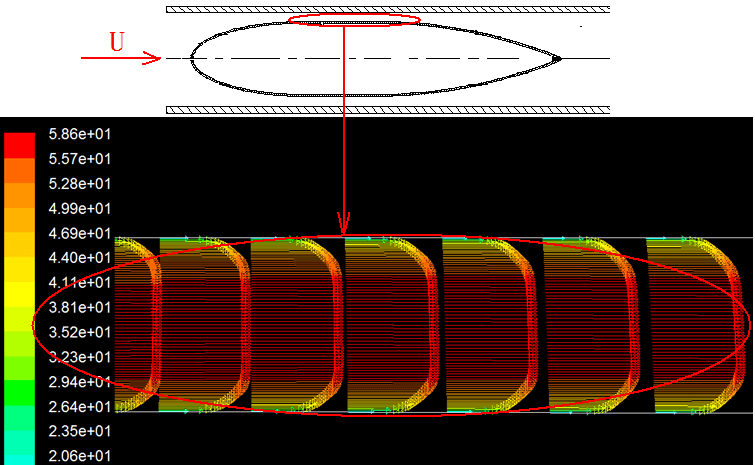
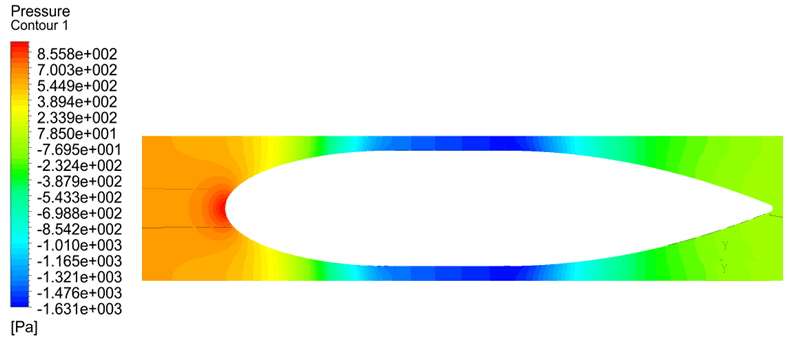
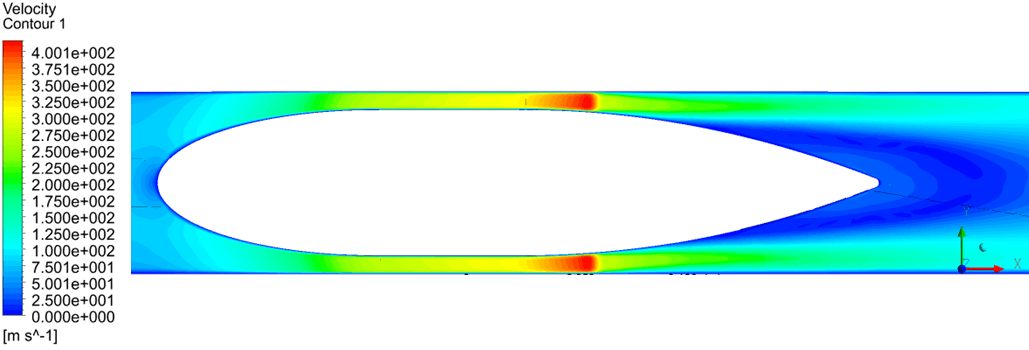
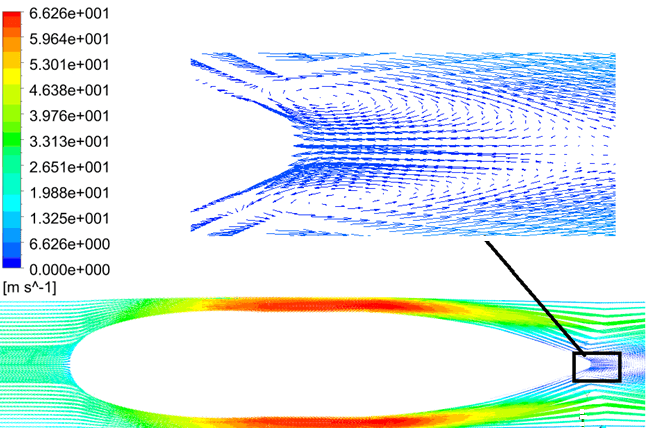
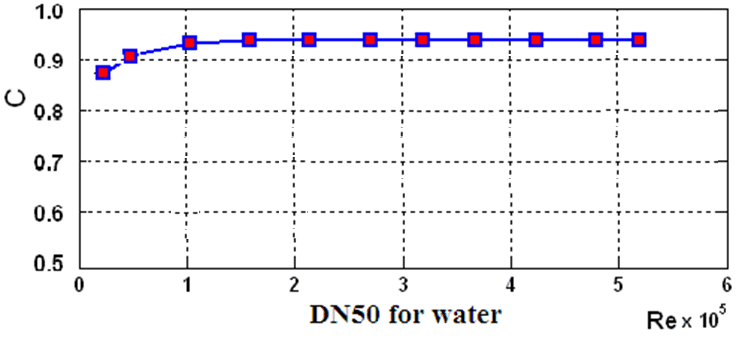
Numerical simulation confirms smooth flow throughout the meter body with only minor separation at the tail cone. Pressure and velocity recover quickly with a short wake, minimizing downstream disturbance. The annular channel re-establishes boundary layers on both sides of the spindle; as Reynolds number increases, the boundary layer thins and the discharge coefficient stabilizes to a constant value.
The meter can convert asymmetric inlet flow — such as flow from an elbow — into uniform, axis-symmetric flow without external straight-run piping.
Distributed internationally by H51 Group · Manufactured by Beijing Spindle Technology Development Co., Ltd.
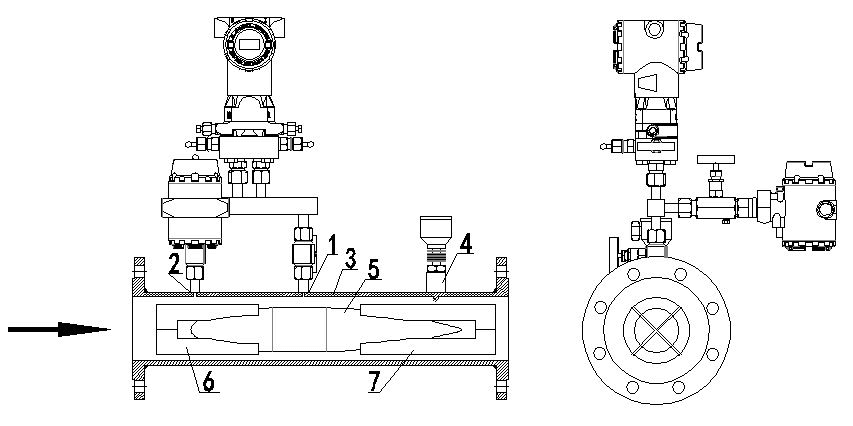
Engineering Drawings & CFD
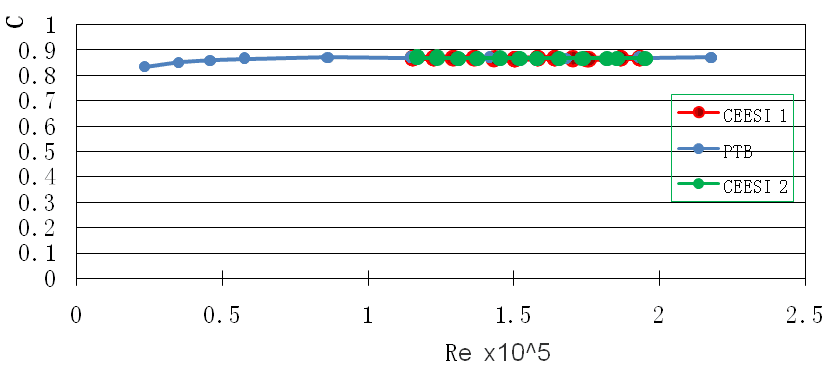
Cross-sections, computational fluid dynamics results, and calibration data from the product development and verification program.
Datasheet
| Series | CLJ SPINDLE |
| Measurement Principle | Differential pressure (annular channel) |
| Accuracy — Liquid | Better than 0.15% |
| Accuracy — Gas | Better than 0.3% |
| Repeatability | Better than 0.1% |
| Turndown Ratio | 13:1 standard; up to 500:1 |
| Pipe Size | 1/4 in to 160 in (DN8 – DN4000) |
| Operating Temperature | -200 °C to 850 °C |
| Maximum Pressure | PN 400 (GB); Class 2500 (ASME) |
| Applicable Fluids | Liquid, gas, steam (Re > 2,000) |
| Straight-Run Requirement | None (upstream or downstream) |
| Pressure Loss | ¼ standard orifice plate equivalent |
| Moving Parts | None in measuring body |
| Calibration | Factory flow calibration; coefficient stored in electronics |
| Verification Standard | JJG 640 |
| Flange Standards | GB/T 9119, GB/T 9115, ASME B16.5 |
| Typical Model | CLJ-200-D5-AS-Q-02 |
Measurement Uncertainty (DN80, Gas)
Qmax
0.13%
0.7 × Qmax
0.09%
0.4 × Qmax
0.14%
0.3 × Qmax
0.12%
Calibration Facilities
- NIM (China) — Water facility — DN50 channel flow meter calibrated on national water flow standard.
- PTB (Germany) & CEESI (USA) — DN80 gas calibration at Re > 10⁵
- Jiangsu Gas Flow Center (China) — DN80 calibration on PVTt gas flow facility.
- PTB (Germany) — With elbow upstream — Demonstrated accurate measurement with elbow connected directly, no straight run.
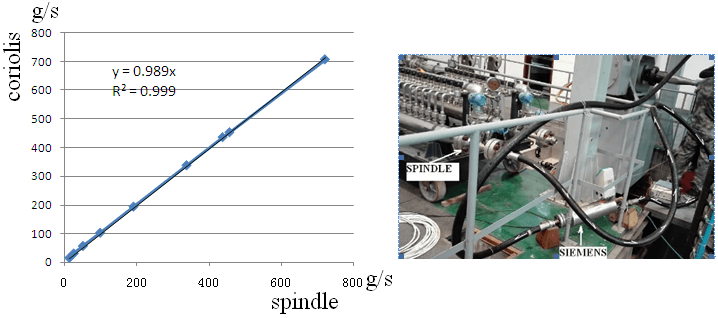
- Siemens Coriolis meter — Series comparison — Excellent correlation in side-by-side testing; any system offset attributable to different transfer standards.
Technology Comparison
How the channel flow meter compares with target and ultrasonic clamp-on technologies for key performance criteria.
| Specification | Target Flow Meter | Ultrasonic (Clamp-on) | Channel Flow Meter |
|---|---|---|---|
| Principle | Mechanical | Transit-time measurement | Differential pressure |
| Accuracy | 1.5% – 5% | 2% – 5% | ≤ 0.5% |
| Repeatability | 0.1% | 0.2% – 0.5% | 0.1% |
| Turndown Ratio | 10:1 | Up to 150:1 (conditional) | 500:1 |
| Verification Standard | JJG 461 | JJG 1030 | JJG 640 |
| Pressure Loss | ½ standard orifice | N/A | ¼ standard orifice |
| Upstream Straight Run | 5D | 30D | Not required |
| Downstream Straight Run | 3D | 10D | Not required |
| Pressure Rating | 42 MPa | N/A | 42 MPa |
| Pipe Diameter-to-Wall Ratio | No requirement | > 10:1 required | No requirement |
| Bidirectional Measurement | Yes | Yes | Yes |
| Moving Parts in Body | Yes | No | No |
| Coupling Agent Required | No | Yes | No |
| Maintenance | High cost | Medium cost | Maintenance-free |
| Industry Track Record | Extensive | Moderate | Established |